Fluorescence imaging workflows for therapeutic screening and phenomic readouts.
We support pharma and biotech R&D teams with disease-relevant cell models, fluorescence labeling, high-content imaging, and quantitative phenomic analysis for target validation, lead evaluation, ADMET profiling, and mechanism-of-action studies.
Our discovery pipeline is cellular.
From biology to AI-ready insight.
We support drug discovery teams with advanced cell models, fluorescence assays, high-content imaging, and quantitative phenomic data across therapeutic modalities.
Phenotypic screening in human cell systems.
CellCircuit uses fluorescence imaging and quantitative phenomics to help drug discovery teams evaluate cellular response, marker expression, and candidate effects in human-relevant models.
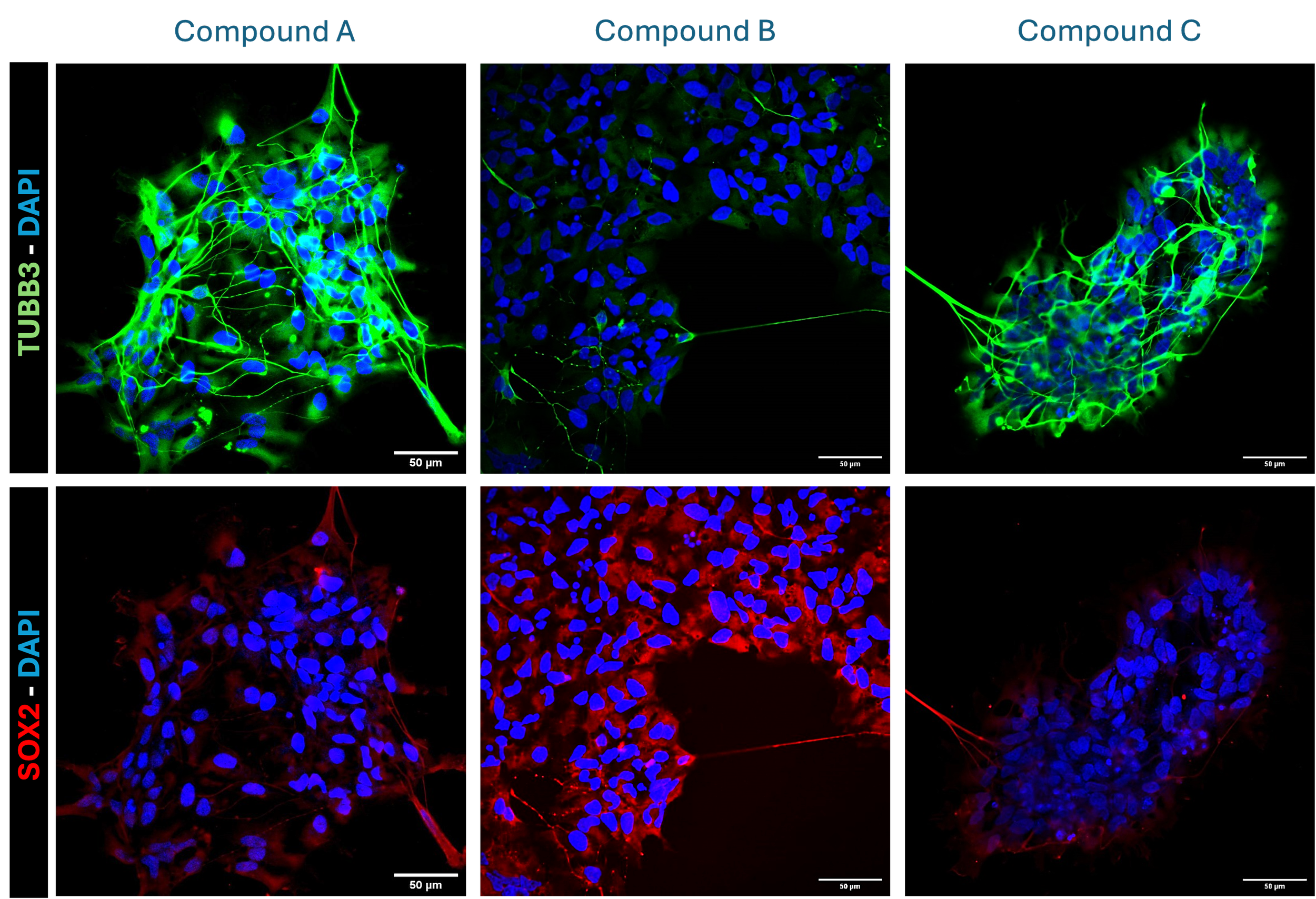
Compound screening in human neural stem cells
Assess how treatment conditions influence neural phenotype, maturation state, and marker expression.
Human neural stem cell response profiling with image-based comparison across compound conditions.
Cell culture, compound treatment, fluorescence labeling, imaging, and quantitative phenomic analysis.
Lineage and maturation-associated fluorescence readouts.
Image-derived cellular changes following treatment.
Structured features for compound comparison and interpretation.