Making Cellular Signaling Visible
From structure to signal, we uncover how cellular behavior emerges across tailored microenvironments, translating imaging data into actionable insights.
Designing the context behind the data.
We build experimental systems where cellular behavior is shaped, not assumed, so imaging reveals structure, signaling, and response in biologically meaningful ways.
Why teams choose CellCircuit Bio
We bring together advanced model design, fluorescence labeling, imaging, and analysis in a way that keeps the biology central and the outputs decision-ready.
A modular workflow for advanced cellular imaging.
From model design to analysis-ready outputs, we build imaging workflows around the biology you need to understand.
Model Development
2D and 3D cellular systems tailored to your biological question.
Fluorescent Labeling
Marker strategies optimized for specificity and signal quality.
Advanced Imaging
High-quality imaging across samples and conditions.
Quantitative Analysis
Structured outputs enabling interpretation and decision-making.
Where cellular signaling becomes visible.
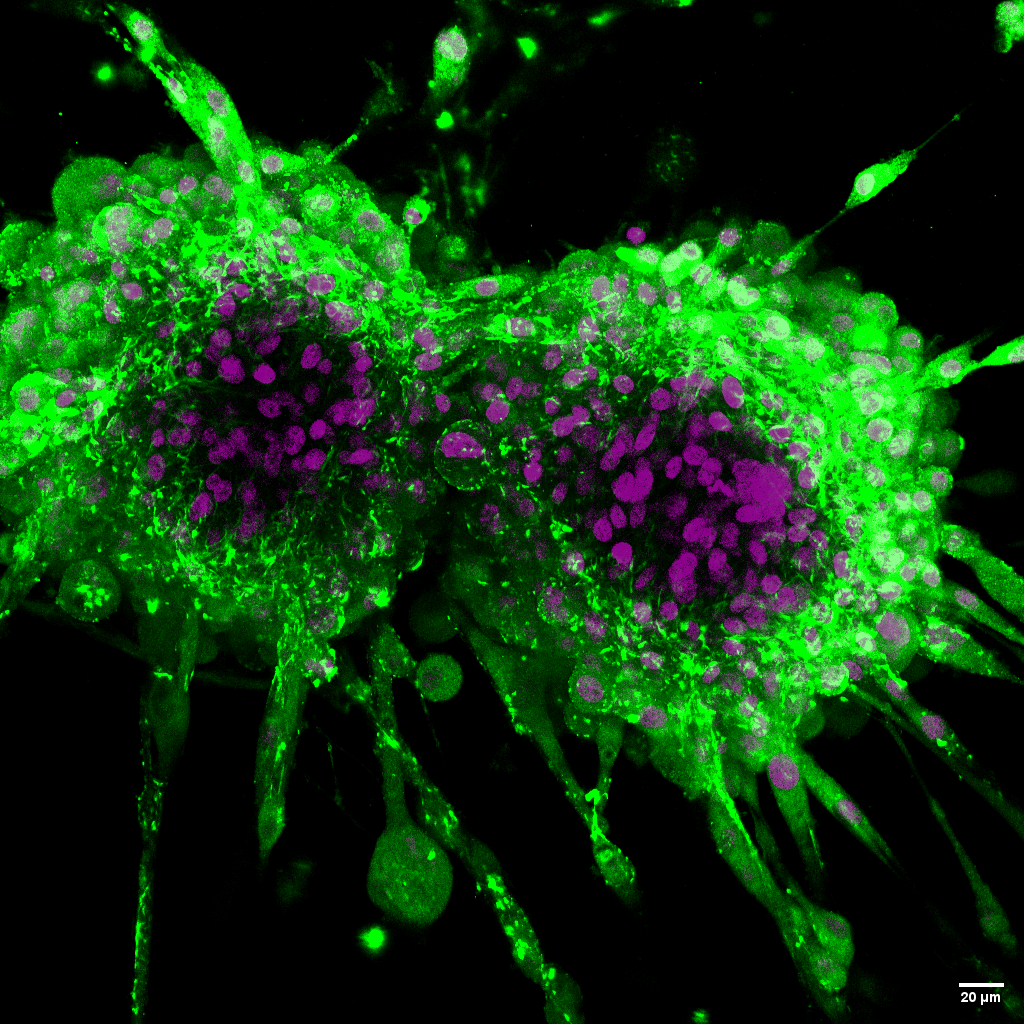
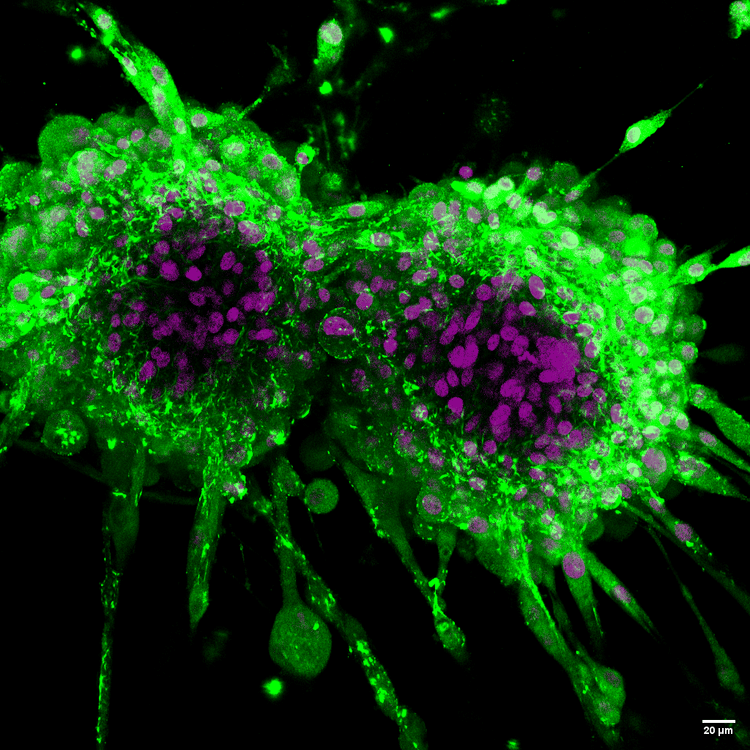
Fluorescence imaging across 2D and 3D systems, revealing how cells organize, respond, and interact within defined biological contexts.
Why high-content fluorescence imaging?
High-content fluorescence imaging reveals where proteins are expressed, how cells change state, and how biological responses vary across advanced 2D and 3D in vitro systems, turning complex biology into structured, decision-ready insight.
See biology at the cellular level
Measure protein expression, localization, morphology, and cellular behavior instead of relying only on bulk or endpoint readouts.
Capture spatial and functional context
Understand how cells organize, interact, and respond within their microenvironment through multiplex fluorescence and image-based analysis.
Compare responses across 2D and 3D systems
Evaluate cellular behavior in biologically relevant in vitro models, where structure, matrix, and dimensionality can strongly influence results.
Turn imaging into usable data
Generate structured quantitative outputs that support assay development, mechanism-of-action studies, phenotypic profiling, and better biological decisions.